
Counting the uncounted—why India’s migration survey matters
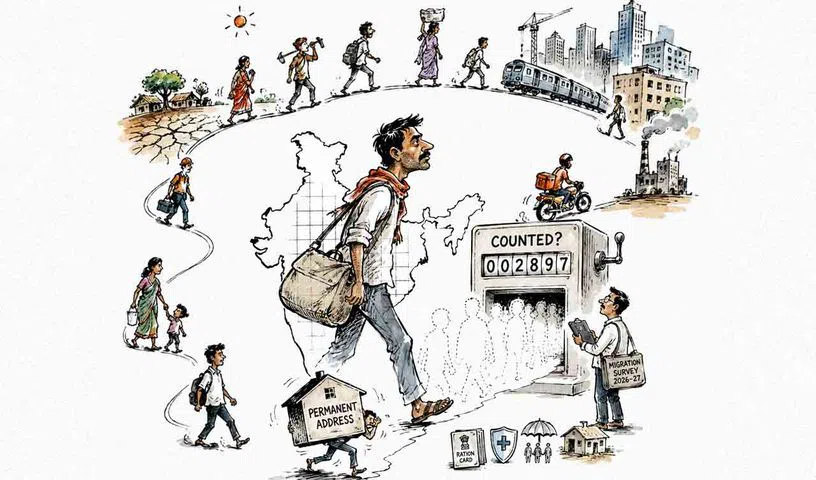
The first dedicated comprehensive migration survey in India in nearly two decades is a chance to gain insight into a segment of the workforce that is key to the economy but has largely been ignored in policymaking. The migrant workforce became visible when India went under lockdown during the Covid-19 outbreak in March 2020.
Pictures of labourers walking hundreds of kilometres to reach their villages had a profound impact on policymakers. The crisis not only exposed their vulnerability; it also showed a clear opportunity to build our knowledge of those who make modern India tick.
The issue is not just about migrants being uncounted. The assumption that people live, work, access welfare, and build their lives in one place continues to shape public policy today. However, more and more Indians are moving between districts, States and cities to find work, pursue education and seek opportunities. While mobility is emerging as a key part of India’s development narrative, policies based on permanence are lagging behind.Geographic Reference
Therefore, the government’s decision to carry out a nationwide Migration Survey from July 2026 to June 2027 by the National Statistics Office (NSO) is important. It will provide the most comprehensive migration survey in almost 18 years, after the National Sample Survey’s special migration round in 2007-08. Rapidly evolving labour markets, urbanisation trends and economic aspirations make this an important time to understand one of the most critical but under-researched aspects of modern-day India.
India’s migration is far greater than what is realised. According to Census 2011, nearly 38 per cent of India’s population consisted of migrants, with 45.6 crore counted in 2011 compared with 31.5 crore in 2001. The growth of about 45 per cent was significantly higher than the overall population growth of about 18 per cent over the decade, highlighting mobility as a key aspect of economic change.
The Economic Survey 2017 also estimated that almost nine million people move between States annually, making labour mobility one of the most significant demographic changes in India.
The Periodic Labour Force Survey (PLFS) 2020-21 showed that almost 28.9 per cent of Indians were migrants. The migration rates were 47.9 per cent among women and 10.7 per cent among men
Pictures of labourers walking hundreds of kilometres to reach their villages had a profound impact on policymakers. The crisis not only exposed their vulnerability; it also showed a clear opportunity to build our knowledge of those who make modern India tick.
The issue is not just about migrants being uncounted. The assumption that people live, work, access welfare, and build their lives in one place continues to shape public policy today. However, more and more Indians are moving between districts, States and cities to find work, pursue education and seek opportunities. While mobility is emerging as a key part of India’s development narrative, policies based on permanence are lagging behind.Geographic Reference
Therefore, the government’s decision to carry out a nationwide Migration Survey from July 2026 to June 2027 by the National Statistics Office (NSO) is important. It will provide the most comprehensive migration survey in almost 18 years, after the National Sample Survey’s special migration round in 2007-08. Rapidly evolving labour markets, urbanisation trends and economic aspirations make this an important time to understand one of the most critical but under-researched aspects of modern-day India.
India’s migration is far greater than what is realised. According to Census 2011, nearly 38 per cent of India’s population consisted of migrants, with 45.6 crore counted in 2011 compared with 31.5 crore in 2001. The growth of about 45 per cent was significantly higher than the overall population growth of about 18 per cent over the decade, highlighting mobility as a key aspect of economic change.
The Economic Survey 2017 also estimated that almost nine million people move between States annually, making labour mobility one of the most significant demographic changes in India.
The Periodic Labour Force Survey (PLFS) 2020-21 showed that almost 28.9 per cent of Indians were migrants. The migration rates were 47.9 per cent among women and 10.7 per cent among men